
If you’ve ever driven across a bridge so long you lost sight of land in both directions, chances are you were crossing Lake Pontchartrain.
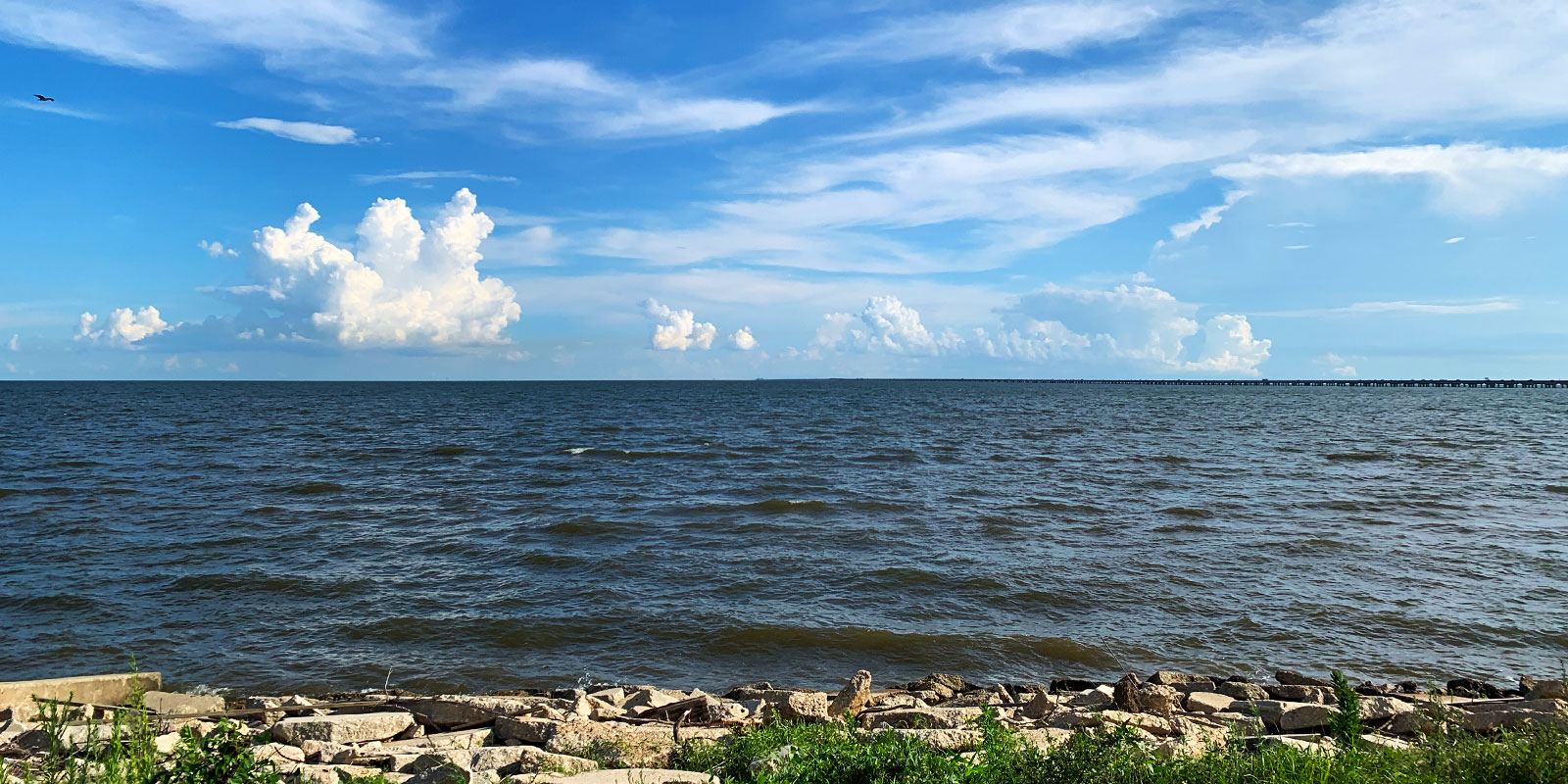
Technically, it’s not even a lake. It’s a vast estuary—630 square miles of shallow, wind-swept brackish water that blurs the line between inland America and the Gulf Coast. But for more than 300 years, locals have called it a lake. And once you see it stretch to the horizon like an inland sea, you’ll understand why the name stuck.
This is the water that defines New Orleans—its geography, its weather, its seafood, even its skyline. It’s where freshwater from rivers and bayous mingles with saltwater tides from the Gulf. It’s where sailboats heel into steady breezes, anglers chase speckled trout at dawn, and commuters glide across the longest continuous bridge over water in the world: the Lake Pontchartrain Causeway.
Lake Pontchartrain isn’t just a body of water. It’s a meeting place—of ecosystems, cultures, and lifestyles.
A Vital Link to New Orleans
Lake Pontchartrain forms the northern boundary of New Orleans, shaping the city’s geography, culture, and economy. For generations, the lake has been both a playground and a lifeline. Seafood harvests, commercial shipping routes, and recreational boating all depend on its health.
Perhaps its most famous feature is the Lake Pontchartrain Causeway, the world’s longest continuous bridge over water. Stretching nearly 24 miles, the causeway connects the South Shore near New Orleans to the quieter communities of the North Shore. Driving across it can feel surreal—water as far as the eye can see, sky blending into horizon, and no land in sight for miles.
The contrast between the two shores is part of the lake’s charm. On the South Shore, you’ll find the energy and culture of New Orleans—music, food, and festivals. On the North Shore, towns like Mandeville and Covington offer oak-lined streets, waterfront parks, and a slower-paced lifestyle. It’s city and country separated by a single span of concrete.
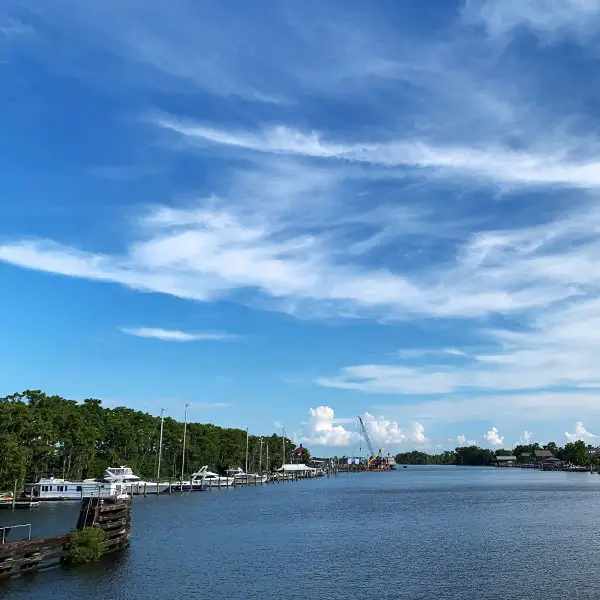
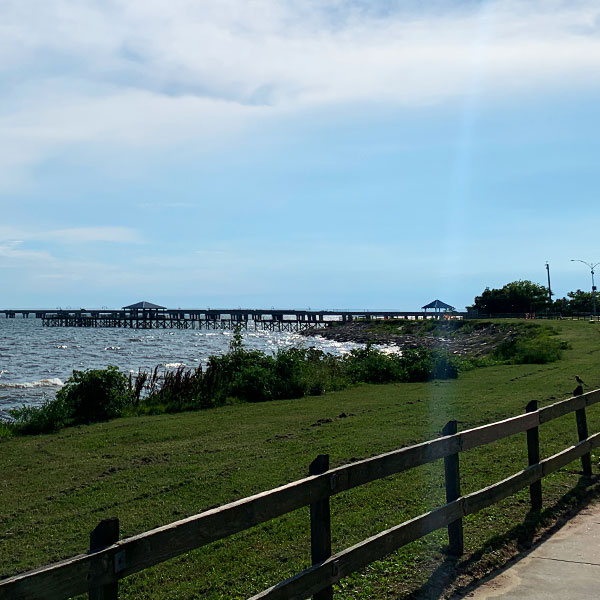
The Brackish Waters and Diverse Fisheries of Lake Pontchartrain
Because Lake Pontchartrain is an estuary, it supports a fascinating mix of freshwater and saltwater species. The salinity level fluctuates depending on rainfall, river inflow, and tidal exchange with the Gulf. That ever-changing balance makes it a dynamic ecosystem.
Anglers can catch speckled trout, redfish, flounder, sheepshead, and black drum—species typically associated with coastal waters. At the same time, freshwater species like largemouth bass and catfish also thrive in certain areas, especially near river mouths and marshy inlets.
Fishing from the causeway is popular, but many anglers prefer launching boats from marinas along the south shore or exploring the marshes that lace the lake’s perimeter. Spring and fall are particularly productive seasons, when mild weather and shifting baitfish patterns draw predators into accessible waters.
Recreation on Lake Pontchartrain
For locals, Lake Pontchartrain is more than a geographic feature—it’s a lifestyle. Sailboats dot the horizon on breezy afternoons. Kayakers paddle along quiet shorelines at sunrise. Families gather at lakeside parks to picnic, fish, or watch the sun dip behind the skyline.
Sunsets here are something special. The wide, open water reflects the sky in brilliant oranges and purples, often silhouetting the New Orleans skyline in the distance. Photographers, joggers, and evening strollers gather along the lakefront to take it all in.
Boating requires a bit of awareness due to shallow areas and sudden wind-driven waves, but experienced captains appreciate the lake’s open feel. Unlike winding bayous or narrow rivers, Pontchartrain offers big-water horizons and room to roam.
Wildlife and Natural Beauty
The lake’s surrounding wetlands teem with life. Brown pelicans, herons, and egrets patrol the shallows. Ospreys dive for fish. In certain areas, dolphins occasionally make appearances, particularly near tidal passes connecting to the Gulf.
The north shore’s cypress-lined inlets contrast sharply with the urban skyline to the south. That blend of wild and metropolitan landscapes is rare. Few lakes in America offer such a dramatic juxtaposition: skyscrapers on one side, marsh grass and migratory birds on the other.
Explore Lake Pontchartrain in Detail
For more information, news, events, trip planning and interesting history, you can explore our sister site Lake-Pontchartrain.com. Here are some shortcuts:
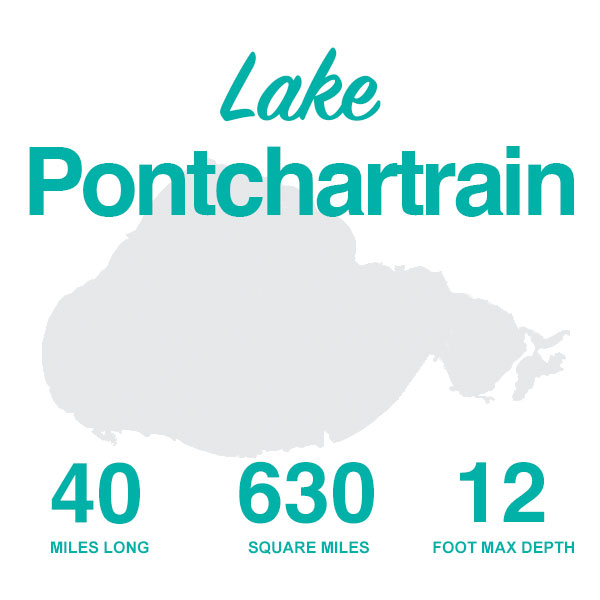
A Lake That Defies Categories
Lake Pontchartrain may not fit the traditional definition of a lake, but that’s part of its intrigue. It’s an estuary with the soul of a coastal lagoon and the cultural gravity of a major American city.
It connects river to gulf, city to suburb, freshwater to saltwater, and history to modern life. Whether you’re crossing the causeway at sunrise, casting a line off a pier, or watching sailboats drift against a New Orleans sunset, Lake Pontchartrain offers a little bit of everything.
And that’s exactly why, technical definitions aside, it will always be known—and loved—as a lake.
Visit this natural wonder!
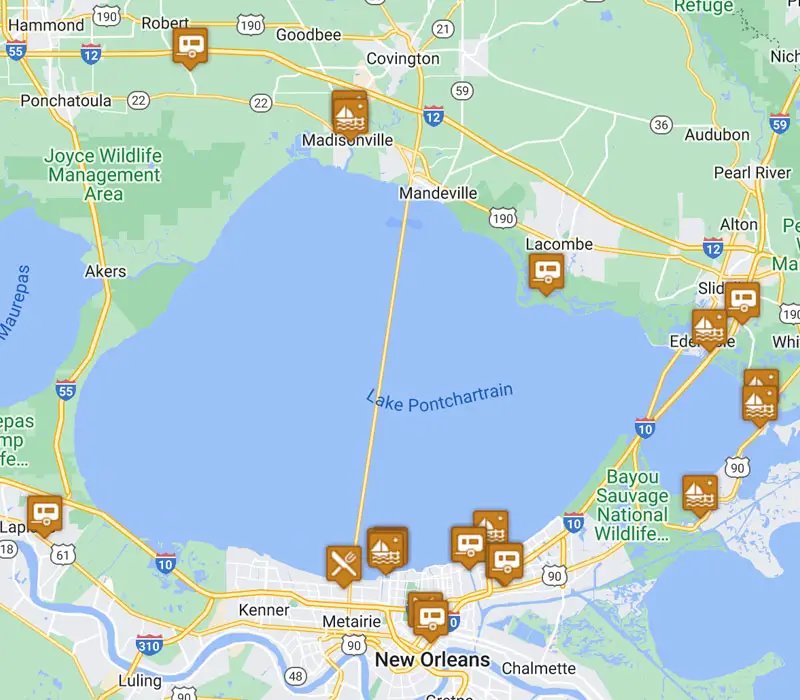
Explore all that Lake Pontchartrain has to offer with our unique interactive Lake Pontchartrain map of campgrounds, marinas, restaurants and things to do around the lake.